• Skip to main content
  • Skip to primary sidebar

EyeSurgeryClinics.org

Archives for May 2022

What Are Cataracts?

May 30, 2022 by eyesurgery

Cataracts are a condition in which older adults may experience cloudy or blurry vision. Cataracts begin to occur more commonly once an older adult reaches or passes the age of 60. Cataracts are a widespread condition that is treated with the help of your doctor.

Cataracts develop when the eye begins to build up the protein in the eye’s lens, leading to clouding a person’s vision. This restricts light from effortlessly passing through clearly, which leads to dark vision and possible vision loss.

There are also multiple types of cataracts.
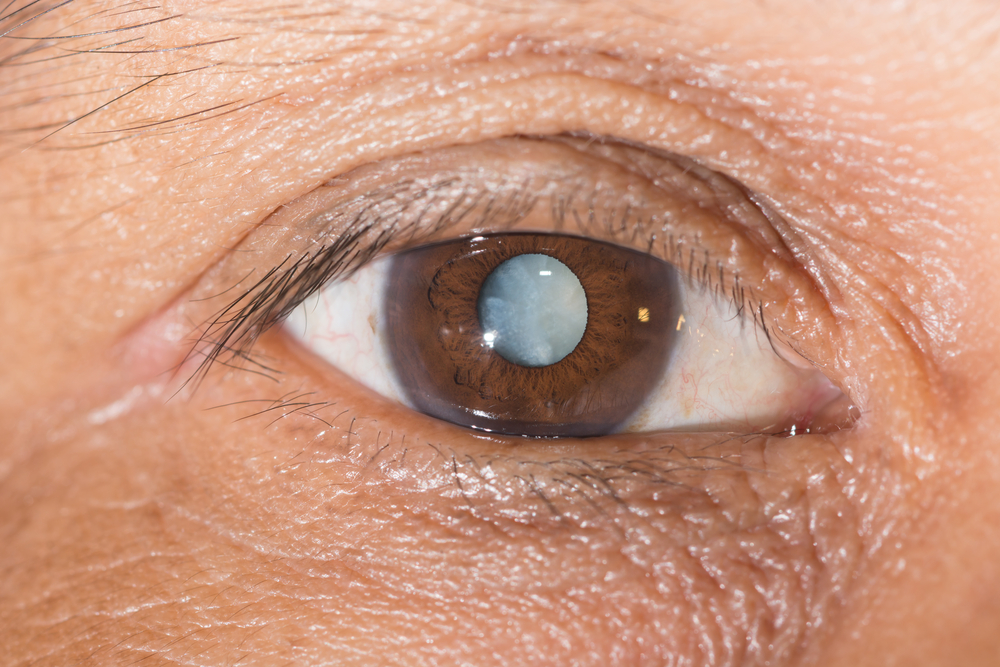
Cataract
Close-up of the mature cataract during an eye examination.

Age-Related

Age-related cataracts are one of the most common forms of cataracts and occur as the eye fogs up with age and as the functions of the eye deteriorate over time.

Congenital

When babies are born with cataracts, it is known as congenital glaucoma. Their cataracts arise from complications in the womb, infection, injuries, or abnormal development in their childhood.

Secondary

These cataracts usually result from other medical conditions, such as diabetes. Cataracts can also be spawned from living in or breathing in toxic substances. Cataracts can form from breathing in materials such as ultraviolet light or radiation or from ingesting medicine such as corticosteroids or diuretics.

Traumatic

These kinds of cataracts occur after any trauma or damage is done to the eye.

Other possible ways of obtaining cataracts are extensive UV light exposure, heavy drinking, and smoking.

Cataract Symptoms

Cataracts can seriously injure and blur your vision. They are similar to other optic conditions, such as glaucoma, in that they form very slowly and are frequently allowed to ultimately develop without any signs. Once cataracts have established to the point where they start to block light, some symptoms may begin to reveal themselves, such as:

  • Vision becomes cloudy, fuzzy, blurry, foggy, or filmy.
  • Nearsightedness or Myopia (Occurs more in older adults)
  • Changes in the way that you perceive color or subtle color blindness.
  • Problems driving at night (An example of this would be a strange glare, or a halo effect,  from headlights.
  • More than usual glare and overall glare problems in the day
  • Double vision in the eye that is affected
  • Possible trouble with eyeglasses and contact lenses not working well or not working at all.

How are they diagnosed?

A diagnosis of cataracts is most likely to be revealed from the results of an eye exam that your optometrist or eye doctor should regularly do with you. They will first complete a review to see how well you can typically see and test with special eye drops that dilate your pupils. This is to check the lens and other parts of the eye. Remember to bring the eyeglasses or contacts that you wear to your appointment.

What is the treatment for cataracts?

Suppose the state of your vision has deteriorated so much that neither glasses nor contacts can take care of it. In that case, your doctor can prescribe medication to save your eyesight or prevent further damage. If even the medicine is not powerful enough to stop cataracts, then cataracts may need to be operated on to fix any cataract-related problem in the eye. Cataract surgery is an outpatient surgery. This means patients can go home the same day if the eye surgery operation is completed. Not to worry, though, as the surgery almost always goes well, with 95% of patients saying that their vision felt better after. The operation entails the surgeon removing the eye’s lens and replacing it with an artificial, human-made one. Complications can arise if the patient has any other eye conditions causing problems.

Medications like eye drops may be prescribed. Patients should also wear sunglasses as they will have strong sensitivity to sunlight in the week or weeks after.

Can they be prevented?

Doctors are still puzzled about the exact cause of cataracts and other similar conditions, such as glaucoma, and still aren’t sure how to prevent these severe ailments. Some valuable advice is to regularly have eye exams as they are the best way to spot cataracts before they enter their advanced stages. These conditions usually happen to older people, especially those over 60, so it is essential to ensure your eyes are completely healthy as an older adult. Although doctors don’t know how to prevent these conditions, they do know that they happen more often to people with a family history of eye problems.
Filed Under: Cataracts

Nearsightedness

May 24, 2022 by eyesurgery

What is it? 

Nearsightedness or myopia as it’s known medically is a condition in the eyes where nearby objects seem clear, but objects that are a little farther away may seem to be blurry and can be hard to focus on. This may result in some difficulties in school or driving, as it could be hard to pinpoint details on whiteboards, screens, or traffic lights. This condition occurs when the cornea or the front clear cover of the eye is too curved or the entire eyeball itself is too long. Myopia is incredibly common with almost a third of the U.S population (30%) being diagnosed with it. Although the cause of the eyeball being too long, or the cornea curving too much isn’t exactly known and sort of a mystery, it is believed to mostly be inherited. Most of the time myopia seems to be inherited from family members who already have it and passed down. If a parent or both have either farsightedness or nearsightedness, then there is a fair chance that their child may receive it at some point in their childhood. Additionally, people that engage in close work such as computer work, reading, or graphic design may be more likely to inherit myopia. 

nearsightedness

Myopia’s Health Conditions 

Myopia usually becomes noticeable in young children and develops until someone’s early 20’s. Although for it to develop in young children is very common and normal, people can develop myopia as adults from stress on the eye or serious health conditions such as diabetes. 

 Strangely, myopia can also factor in environmental problems. One of these environmental problems is known as “night myopia” where far away objects become blurry but only at night. An explanation for this may be that the increased size of the pupils during the night allows for more unfocused rays of light to enter the eye.  

 Another strange form of myopia is a type of fake/”pseudo” myopia. This type of myopia occurs when someone constantly takes part in near visual work. This can create visual stress and for a short while and tires the eyes out. While the eyes are tired out, they are unable to properly and accurately focus on objects farther away until the eyes rest. 

 Symptoms in myopia may be a result of rising blood sugar levels, which are common in diabetics. This is why people with diabetes have a fair chance of having nearsightedness. Another cause for symptoms of myopia may be a forming cataract.  

Phoropter

Diagnosis and Treatment 

Several tests are needed to conclude the state of someone’s vision and discover how well their ability to focus is. Different tests are conducted to see if there is a problem, and if so, which kind is it. A very popular form of testing is known as the distance chart. A distance chart has different levels of letters that get smaller and smaller with every level. The results for this test are usually used as a fraction with 20/20 being perfect for both eyes. This test is meant to be tested for visual acuity and uses 20/20 to describe the number of feet someone has to be to clearly see something. For instance, if someone had 20/20 vision, then they would be able to see something 20 feet away from 20 feet away. But if someone had 10/20 vision, that would mean that they would have to be 10 feet from an object that someone with correct vision would be able to see from 20 feet.[Text Wrapping Break]Doctors also conduct many tests on a phoropter, which is a complicated device with many lenses that are used to measure how the eyes focus light. 

The phoropter measures how the eyes focus light by using a retinoscope. The doctor will then ask a series of questions which in turn allows them to discover which lenses provide the clearest vision. An optometrist usually looks to find lenses that will allow your eyes to see in perfect clarity. 

Most of the time, a doctor will recommend prescribed eyeglasses that are specially made to fit your eyes, as they are easy to make, and aren’t very complicated. Although this is the main way to fix your eyesight, there are also a variety of different ways to help from contact lenses to surgery.   

  • For many, contact lenses are preferred as it provides better clarity and field of view for some even though it does take some amount of precision and care to insert them into your eyes correctly and safely 
  • Ortho-K is a type of corneal therapy aimed to eventually reshape the cornea through rigid contact lenses. The lenses apply pressure to the cornea to flatten it which then allows it to reshape, however for the user’s safety it can only be worn for limited periods of time. 
  • Laser procedures and surgeries are also popular. These procedures entail precise lasers to be used to help any refractive errors in the eye. 

Myopia is an incredibly common eye condition with more than 3 million cases occurring every single year. Myopia or nearsightedness has many different types of treatment such as contacts, glasses, and surgeries. Myopia is the medical term of nearsightedness and it’s a more popular form of treatment is eyeglasses for their simplicity and availability. 

Filed Under: Vision

What Does 20/20 Vision Mean?

May 6, 2022 by eyesurgery

We all recognize the term “20/20 vision.” But what does 20/20 vision mean exactly? That’s what we will get into in this blog.

Plus, we will dive into what other kinds of visions there are and what they mean. Also, we’ll help you understand visual acuity and how doctors use the Snellen eye chart to diagnose eyesight conditions.

Eyesurgeryclinics.org provides several monthly blogs on eye-related topics. If you have an issue with your vision, you can read and learn more about it on our website. We aim to help those with sight problems identify and understand their condition.  We’re also an educational guide for aspiring optometrists and eye professionals.

20/20 Vision Definition

Firstly, what does 20/20 vision mean? Let’s start with the term visual acuity.

Visual acuity is the measure of how sharp your eyesight is. The standard eyesight test that determines your eyes’ sharpness takes place at a distance of twenty feet. The term 20/20 vision is what optometrists use to define normal vision. If you can see items and objects clearly from twenty feet away, doctors will deem you have 20/20 vision.

Visual acuity tests can be thorough, and they don’t always only test your forward vision. They may extend to your coordination, peripheral vision, focus, and depth perception. Doctors will have you look at various size letters from different angles to gauge your vision level.

Even with in-depth testing, it can be hard to predict some eyesight issues you may have. For example, you may have trouble differentiating between colors and reading text with monochromatic backgrounds despite having 20/20 vision.

There are a few things that make for healthy visual acuity. Your cornea and lens’s job is to reflect light onto your retina. The efficiency of the lens and cornea dictates how sharp your vision is. Nerve sensitivity is also a factor in your visual acuity. Your nerves help protect your eye and allow you to process most visuals instantly.

People with clear eyesight do not require prescription glasses. However, as you get older, your sight may become worse. Just because you have 20/20 vision today doesn’t mean it will remain that way for the rest of your life.

You need to prove you have 20/20 vision to work some jobs. For example, 20/20 vision is the minimum eye strength that pilots need to fly a plane.

The Snellen Eye Chart

Though you may not recognize the name, most everyone knows what the Snellen eye chart is. Typically, your doctor or optometrist will place the Snellen chart in front of you and have you cover one eye. The chart has letters of all sizes, with the top row being the largest and the bottom row the smallest. You read the letters aloud, row by row.

This test is how doctors evaluate the sharpness of your vision. If you reach the eighth row of letters, your optometrist will determine that you have 20/20 vision. Doctors use this chart to diagnose a few different eye conditions. If you fail the test, you may require prescription glasses.

20/20 Variations

There are many different types of vision aside from 20/20. Firstly, there’s 20/15 eyesight. This level is better than its 20/20 counterpart. A person with 20/15 vision can see an item at twenty feet, what a person with 20/20 vision can only see standing fifteen feet away. Thus, people with 20/15 vision have better eyesight than those with 20/20.

Alternatively, there is 20/40 vision. Most everyone has at least this level of sight. It is the minimum eyesight you need to obtain a driver’s license in all fifty states. If you have lower than 20/40 vision, you will have difficulty reading books, paperwork, or any printed material.

Further down the line, we have 20/80 vision. An item on this level of eyesight is newspaper headlines. While not legally blind at 20/80, optometrists consider people with 20/80 moderately visually impaired, and you would require prescription glasses.

In some cases, you can correct 20/80 vision with eye surgery. Consult your optometrist about possible corrective procedures. Eyeglass technology has come a long way and is better than ever, and corrective eye surgery is becoming more common for those looking for a more permanent solution.

Finally, there is 20/200 vision. Optometrists will require you to wear eyewear at this level of sight. Plus, they will consider you legally blind. You need to stand twenty feet away from what people with 20/20 vision can see from 200 feet. However, people with 20/200 vision can still live a high-quality life.

Is 20/20 Vision Perfect?

Contrary to popular belief, 20/20 vision does not mean that you have perfect sight. Optometrists consider people with 20/20 vision to have normal eyesight.

It is possible to have more than 20/20 vision. People with this level of visual prowess may have some flaws in their peripheral vision or coordination. Your optometrist will let you know if your eyes need further evaluation after your Snellen test.

Many people who want to improve their eyesight turn to LASIK, a laser correction procedure. Ask your ophthalmologist about laser treatment to see if it is right for you. If it is, your ophthalmologist can refer you to a LASIK surgeon.

There are also eye specialists for athletes who feel their vision when playing sports is weak. Your optometrist can refer you to a sports specialist who can better diagnose your condition.

Read More

Most people have 20/20 vision. However, it is not a problem if you do not. As we get older, our eyesight diminishes, which is a part of life. The crucial thing is not to let it impact your day-to-day routine. With the proper treatment, you can find a way to cope with your eye disorder.

If you enjoy this article, feel free to browse more of our informational guides about other eye-related topics. We strive to help you learn all there is to know about eye conditions and terminology. Each year, we help thousands of people learn more about their eyesight issues and lead them on the path toward treatment.

Filed Under: Vision

Primary Sidebar

Pages

  • Home
  • About
  • Contact
  • Privacy Policy
  • Medical Disclaimer

Recent Posts

  • How Long Does Cataract Surgery Take?
  • What Is Strabismus?
  • The Dangers Of Lasik Eye Surgery
  • What is Glaucoma?
  • FarSightedness

Archives

  • October 2022
  • September 2022
  • August 2022
  • July 2022
  • June 2022
  • May 2022
  • April 2022
  • February 2022
  • January 2022

Categories

  • Cataracts
  • Glaucoma
  • LASIK
  • Vision

Medical Disclaimer

All content and media on this website are created and published online for informational purposes only. It is not intended as a substitute for professional medical advice and should not be relied on as health or personal advice.

Copyright © 2026 · Metro Pro on Genesis Framework · WordPress · Log in